Neue Deutsche Dinge
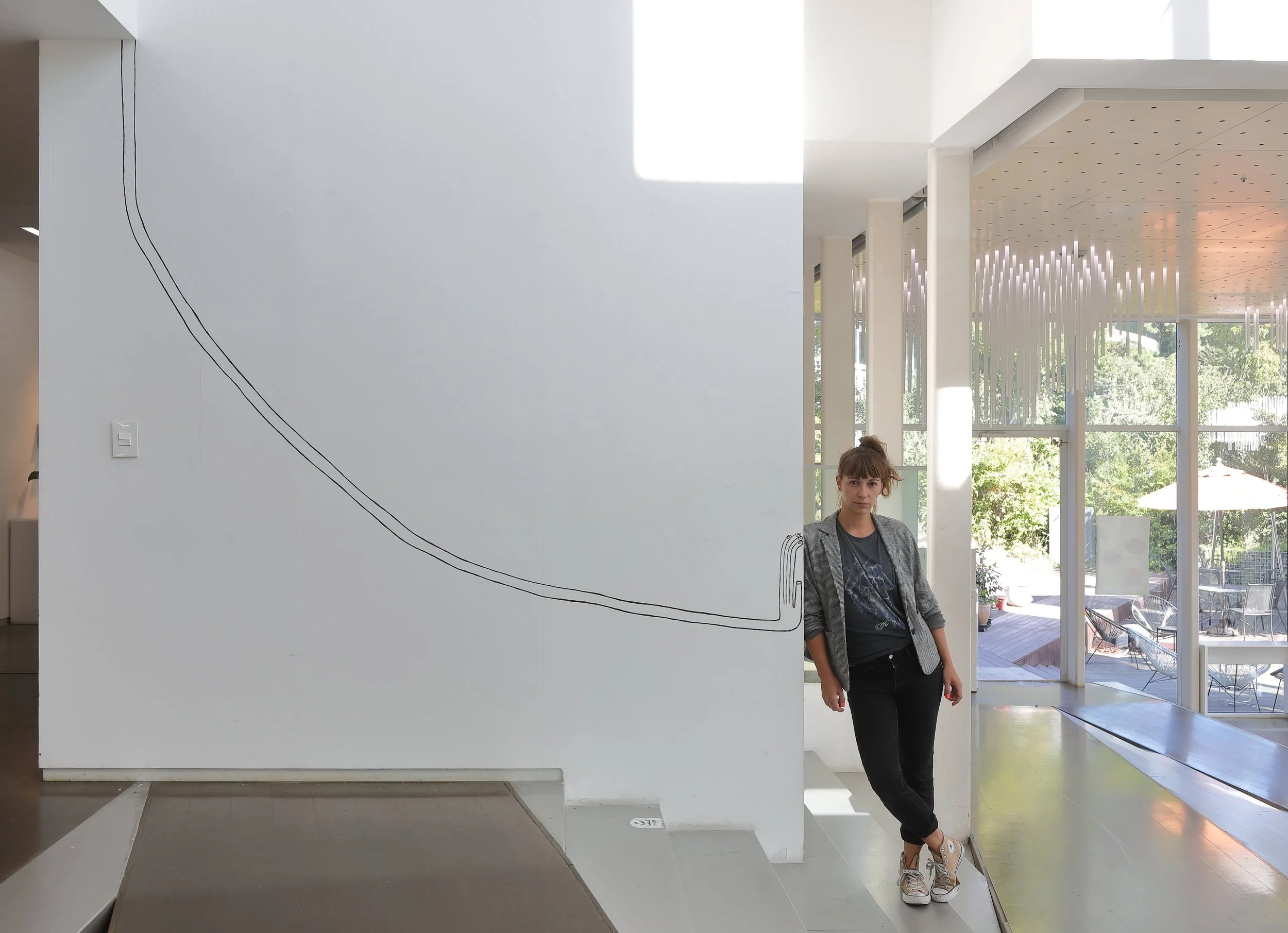
Groupshow, Jinseok Lee, David Benedikt Wirth, Klara Virnich, Sophie Ullrich, White Block Museum, Paju, South Korea, 2022
Perspective Towards the World
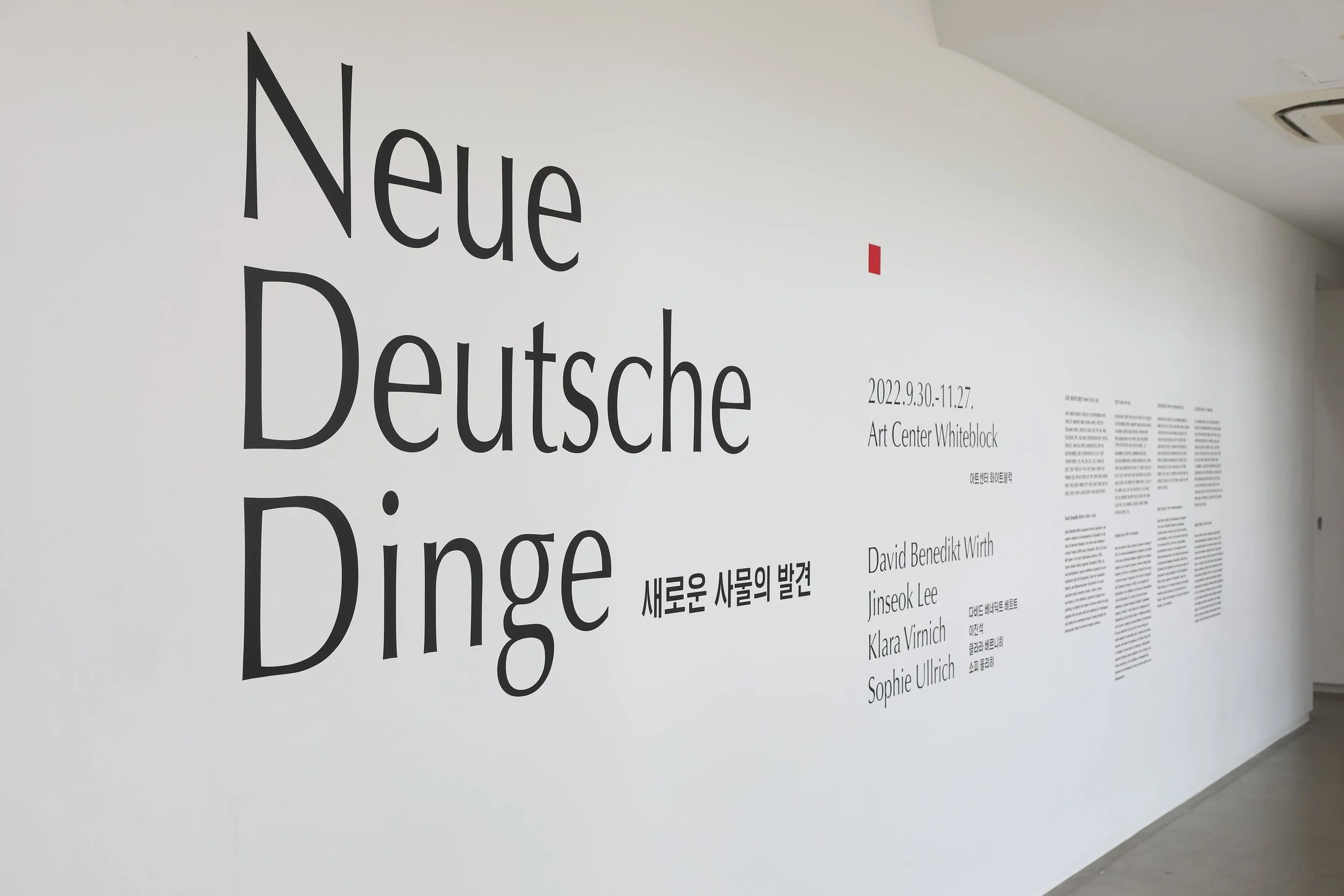
Neue Deutsche Dinge¹ is the exhibition following Deutsche Dinge, the opening exhibition of Art Center White Block in 2011. The title, in Korean, was meant to be ‘rediscovery of objects’, and in German, Deutsche Dinge, means German objects or German problems and events. It was curated by Klaus Klemp (1954~ ), and Anton Stankowski (1906~1998), Tatjana Doll (1970~ ), and Eberhard Havekost (1967~2019) participated. In the introduction of the exhibition, the curator Klaus Klemp wrote, “Deutsche Dinge does not explain Germany, but shows the artistic perspectives of the three artists. (…) They all reflect the interests of everyday objects that represent the problems of this era.”²
More than ten years have passed since Deutsche Dinge was held. The past decade has been a period of rapid development of science and technology than any other period. Human’s long-cherished desire has been realized; for example, the space tourism has begun, autonomous vehicle has become a reality, and a genetically altered “designer baby” has become possible. As smartphones have been commonplace, the borders between countries disappeared, the mobile culture embraced all generations, and the online commerce became the mainstream of the market. Moreover, the A.I. chatbot made possible to get valuable information by searching with only voice. Meanwhile, the climate crisis has become a critical issue, and global epidemics such as MERS and COVID-19 have threatened human health and survival.
Neue Deutsche Dinge is an exhibition that asks once again what the problems of this period are. Korean artist, Jinseok Lee, German artists, David Benedikt Wirth, Klara Virnich, and Sophie Ullrich invited in this exhibition. All of them studied in the class of Eberhard Havekost at Kunstakademie, Düsseldorf, and keep contact with Tatjana Doll, a professor at the State Academy of Fine Arts Karlsruhe. They are artists who are building up their unique world of art along with the influence of previous generations of artists.
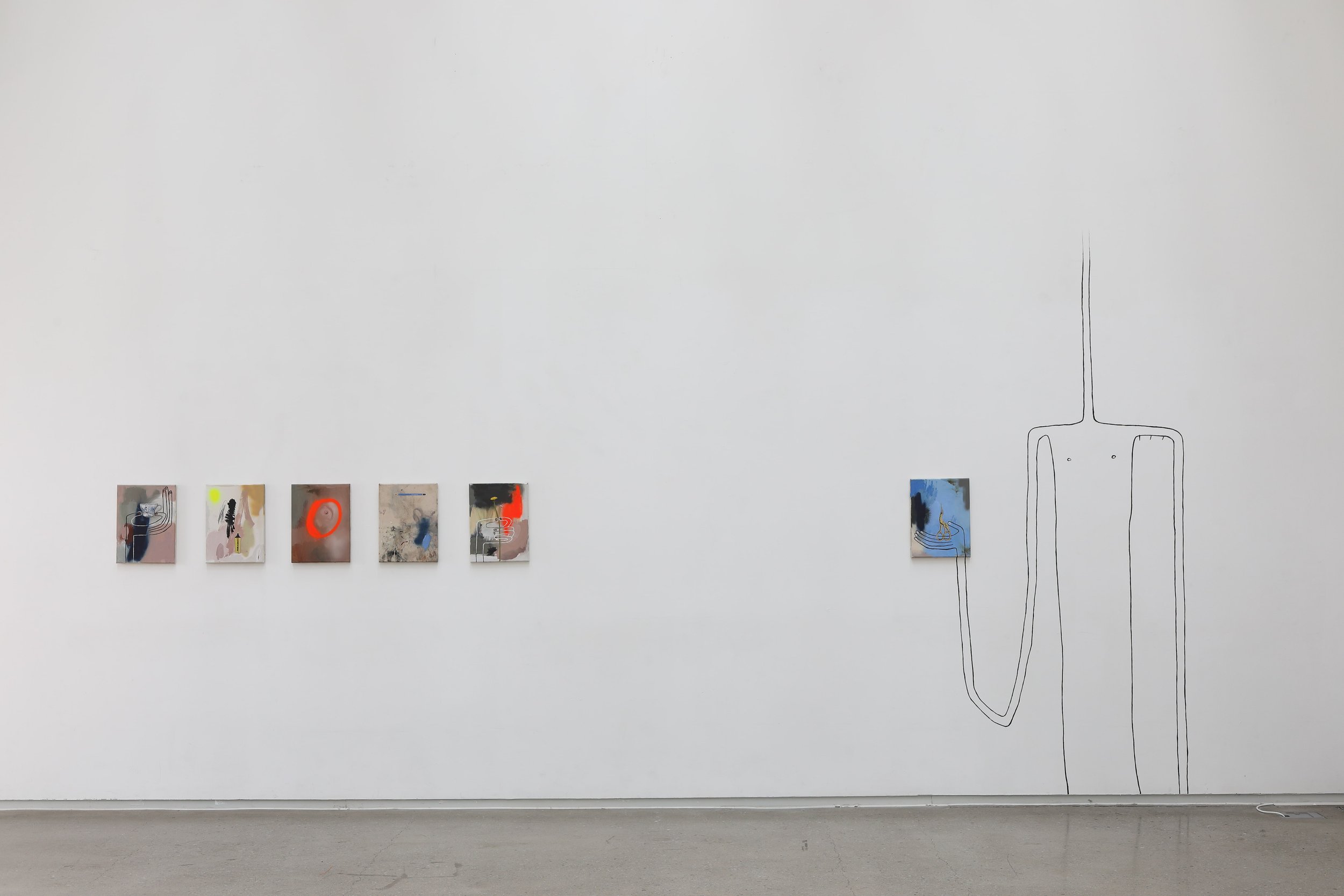
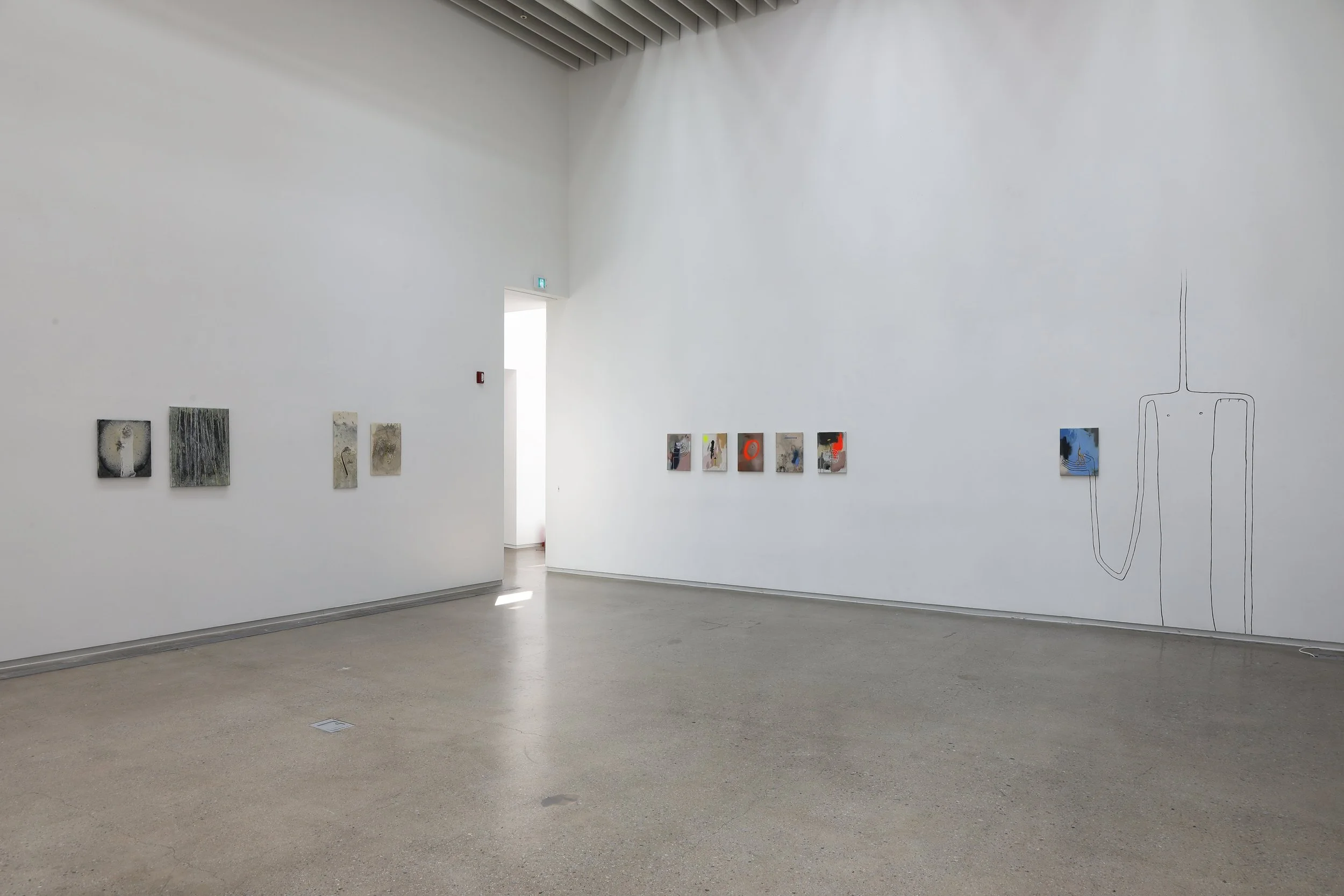
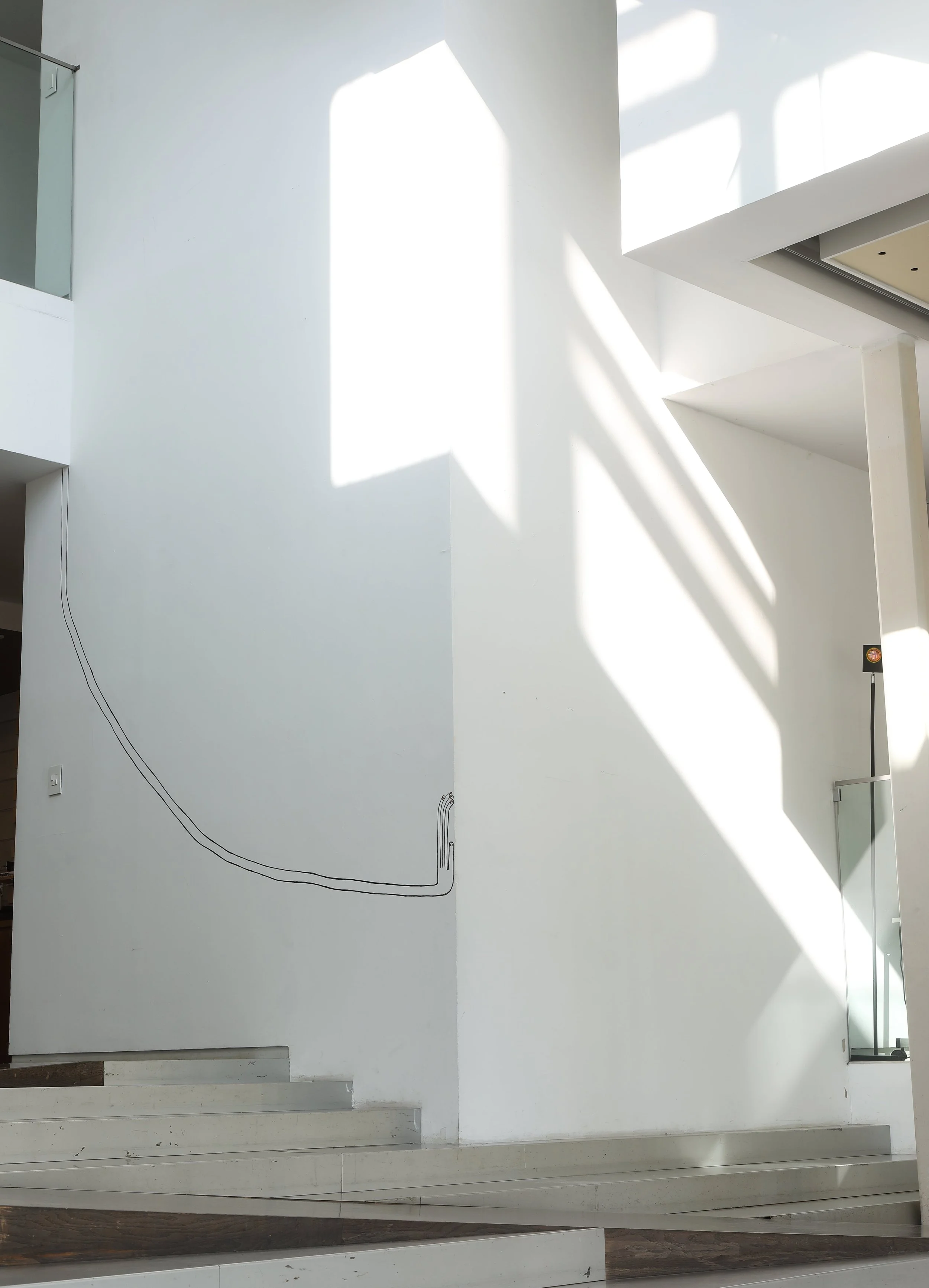
The four artists show a new perspective towards the world in this time of change. They use images searched from SNS or the Internet, which are the result of technological development. On the other hand, they show the history of nature and earth as well as humanity. David Benedikt Wirth explores the relationship between ancient earth, nature, and civilization. Tethys is a painting of a goblin shark that lived in Tethys, the sea between the Gondwana and Laurasia continents of the Mesozoic Era, and the image was searched from the Internet. Known as an ancient creature, the goblin shark has been survived for a long time on earth³, but humans only discovered its existence 120 years ago. It reminds us of an eco-system of earth before civilization which is constantly being built up by mankind. He asks questions constantly about the history, civilization, science, and technology that humans have accomplished as he draws traces found in old caves and objects seen through thermal imaging cameras or ultrasonic waves. Klara Virnich, a painter and performance artist, explores femininity with its origins in German mysticism. In her paintings, the Female body is not different from animals in the wild nature. The primitive appearance of women creates a fantastic and mysterious atmosphere. Jinseok Lee uses natural materials such as charcoal, soil, straw, and ashes, which symbolize life as well as death. He creates a landscape where life and death, eternity and fleeting moment coexist. Sophie Ullrich draw cartoon images on the background where the paint drawn across the surface freely. Solid color lines trace out the body parts, such as hands and feet, and the body without a head. This image creates a humorous scene by contrasting with the painterly background or intervenes with the images. It is as if two overlapping dimensions interfere with each other.
“Their works reveal a new approach to the world, as the German philosopher Heidegger mentioned about contemporary art.” ⁴ This quote is the last sentence of the introduction written by Klaus Klemp for the exhibition Deutsche Dinge. I would like to end this text with the sentence as well.
Kang Sung-eun, Chief Curator, Art Center White Block